


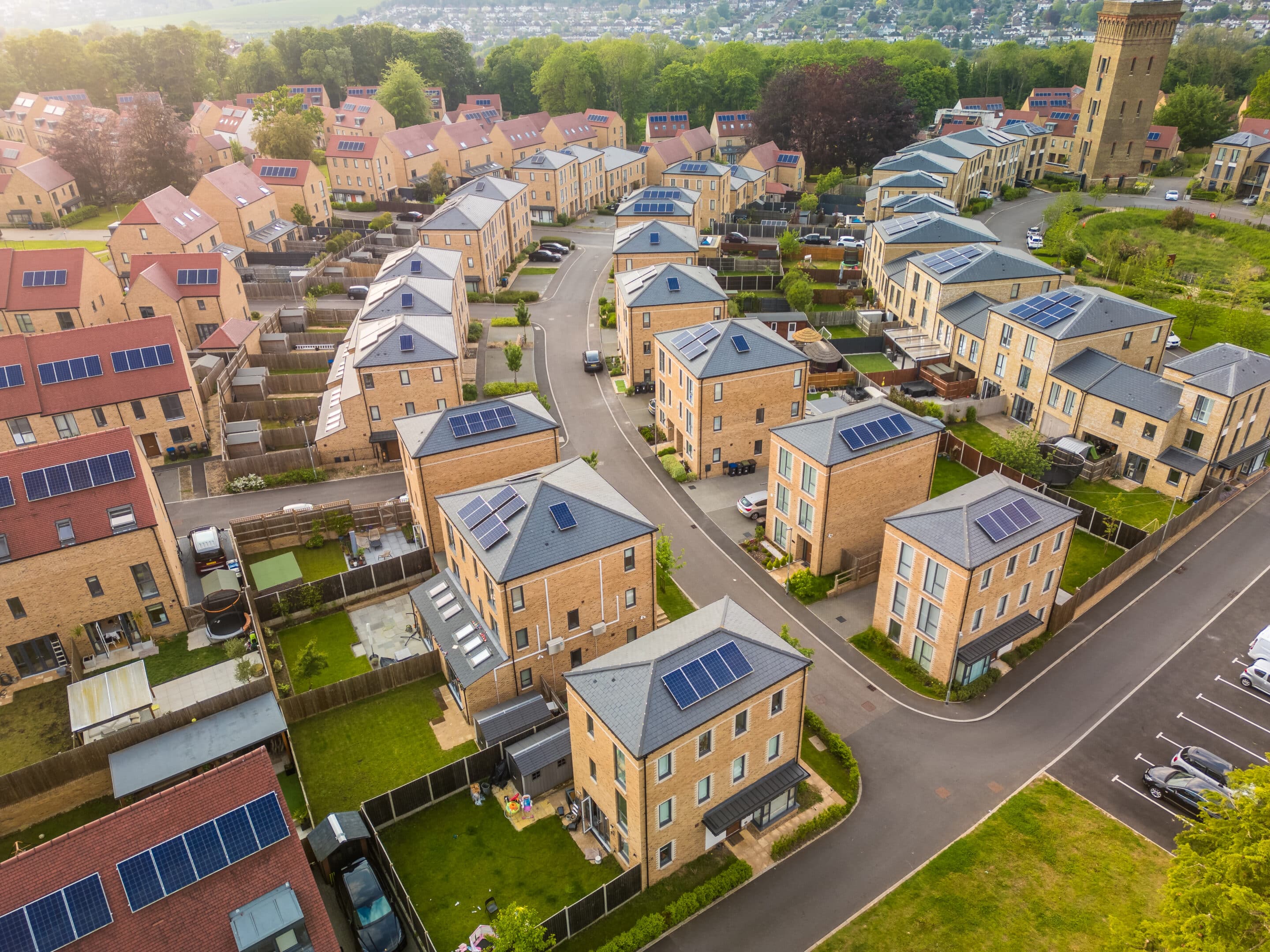
Today it would seem there is little or no good news around and that optimism may seem in short supply. The UK property development sector is not immune from this perception of course.
Economic growth remains subdued, inflationary pressures continue to affect businesses and households alike, construction costs remain uncertain compared to historic norms, and geopolitical tensions continue to influence global markets. It is understandable to believe that our sector will be one of those to suffer.
Yet property development has always been an area that rewards those willing to look beyond short-term sentiment and focus on more medium to long-term fundamentals. By that measure, there is a stronger case for optimism than may seem obvious.
The Fundamentals Remain Strong
The most powerful reason is also the simplest: the UK continues to suffer from a significant shortage of housing.
For decades, we have failed to build enough homes to meet demand. Population growth, and persistent under-supply have created an imbalance that remains largely unresolved. Regardless of economic cycles, the need for new housing continues to grow.
This underlying demand provides a strong foundation for developers. While market conditions may influence the pace of delivery, they do not remove the need for new homes. In many locations across the UK, particularly those supported by strong employment and transport infrastructure, demand continues to exceed supply.
A More Balanced Market Is Emerging
The second reason for optimism is that the market is becoming more rational.
The era of exceptionally low interest rates has for now gone, however it created an environment in which land values rose rapidly and competition for opportunities intensified. While higher borrowing costs have undoubtedly presented their own challenges, they have also encouraged greater discipline across the sector.
Developers are underwriting projects more carefully, lenders are focusing on quality and viability, which should mean that vendors will begin to adjust their expectations to reflect current market realities. In many respects, this is creating a healthier and more sustainable development environment. There is always a time lag here, but history tells us it will occur.
One of the more overlooked advantages of today’s market is that uncertainty itself can create opportunity.
During periods of strong market confidence, competition for sites is intense, pricing can become too aggressive and opportunities are often quickly absorbed. In contrast, periods of caution tend to encourage a more measured approach, with some developers delaying decisions while others wait for clearer economic signals.
Yet history repeatedly shows that the most successful developments are rarely acquired when conditions feel perfect. They are often secured during periods of uncertainty, when competition is reduced and opportunities can be assessed on their underlying merits rather than market momentum.
Experienced developers understand that property development is ultimately a long-term business. By the time a scheme is acquired, planned, funded and delivered, market conditions may look very different from those that existed at the point of acquisition. For this reason, certainty is often less important than conviction in the fundamentals.
Those prepared to act decisively when others hesitate can frequently position themselves to benefit when confidence returns to the market. For experienced developers, this creates a particularly attractive environment and quite often is their preference.
Finance, Investment And Regional Growth Continue To Support Development
The availability of development finance also remains a positive factor.
While funding costs are higher than in previous years, specialist lenders such as BLG continue to support viable schemes backed by experienced developers. Importantly, the market has adapted to the new interest rate environment. Greater stability and predictability allow developers and lenders alike to plan with increased confidence.
Another source of optimism is the continued strength of the UK’s regional markets.
Cities such as Manchester, Birmingham, Leeds, Bristol and Liverpool continue to benefit from investment, regeneration and employment growth. These locations attract businesses, students and professionals, all of which support demand for new residential and mixed-use development.
The continued growth of the build-to-rent sector further reinforces this trend. Institutional investors remain attracted to the long-term fundamentals of UK residential property, recognising the enduring demand for high-quality rental accommodation. This inflow of capital continues to support development activity across many regional markets.
Looking Ahead With Confidence
Perhaps most importantly, the property development industry has demonstrated remarkable resilience over time.
The sector has successfully navigated the global financial crisis, Brexit, the pandemic, supply chain disruption and periods of significant inflation. Throughout each challenge, developers adapted, evolved and continued to deliver the homes, commercial space and infrastructure required by growing communities.
It would be naive to say that the current UK property development market is without its challenges. However, challenges alone do not define a market. Demand remains strong, housing supply remains constrained, regional economies continue to evolve, and investment capital remains active.
For those willing to focus on fundamentals rather than headlines, the outlook is brighter than many assume. The conditions may be different from those of previous cycles, but the opportunities remain very real.
The case for optimism is not based on ignoring the challenges facing the market. It is based on recognising that the long-term drivers of development remain firmly in place. And for developers, investors and lenders alike, that should provide plenty of reasons to look ahead with confidence.
– Perry Kurash, Director- Head of New Business